Ronnie McGrath
Hide and SeekRonnie McGrath is a heroin user from Stirling whose death becomes the first visible sign of a concealed world of exploitation and influence in Edinburgh. Found in an abandoned house in Pilmuir, he appears at first to be the victim of an overdose accompanied by a deliberately unsettling tableau. As John Rebus investigates, the apparent ritual gives way to a more ordinary but more extensive pattern of violence: Ronnie was deprived of drugs, given a lethal supply, and connected to photographs he described as protection for his future. His story is both a murder inquiry and a portrait of how addiction makes a person vulnerable to those who control money, drugs, and attention.
Identity and Circumstances
Ronnie is identified to John Rebus by Tracy, who calls to report that someone has died and names the deceased as Ronnie. Later, Rebus learns that Ronnie was originally from Stirling. He was living in Edinburgh and using heroin, in a city where intravenous drug use was widespread enough for the police doctor to describe it as numbering in the hundreds. The doctor also connects the city’s drug problem to its high incidence of AIDS. Ronnie’s dependence is therefore presented within a public-health crisis, rather than as an isolated private failing.
The circumstances around his death place him among people with little protection. The house in Pilmuir is part of a deteriorating estate: boarded windows, damaged surroundings, and playgrounds in disrepair mark a neighborhood being left to decay. A few hundred yards away, a developer advertises new private apartments as a luxury development, but John Rebus regards the branding as an attempt to disguise the area’s enduring conditions. Ronnie’s death in an abandoned building makes the contrast concrete: the city’s property ambitions sit close to places where people have been left without secure shelter or care.
Death and the Misleading Scene
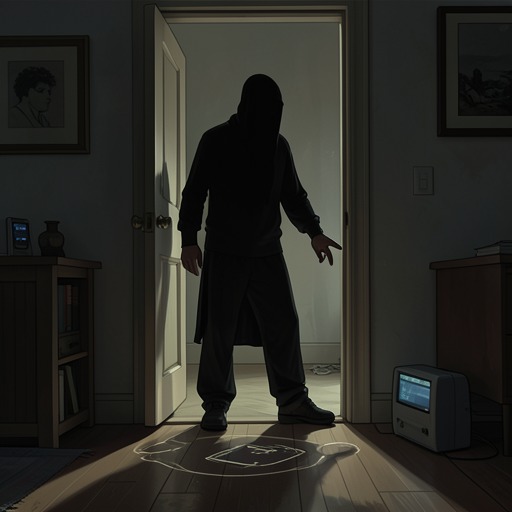
Ronnie’s body is found in a large, dim room between two burned-down candles. His arms are outstretched and his legs together, an arrangement that prompts John Rebus to see a cross-like shape. A glass jar that had once held instant coffee contains disposable syringes. On the bare wall is a carefully drawn five-pointed star inside two concentric circles, the outer circle about five feet across. These details encourage an occult interpretation, but they do not establish that Ronnie’s death was a sacrifice.
The police doctor reports extensive bruising, consistent with either a heavy fall or some kind of physical confrontation. Later, Dr Enfield reports that Ronnie’s stomach was almost empty and that he was HIV-negative. The heroin associated with the death was 95 percent impure; Dr Enfield’s educated guess is that it had been diluted with something as dangerous as rat poison. The substance was lethal. These findings turn the inquiry away from the star and candles and toward the drug supply and the physical circumstances of Ronnie’s death.
John Rebus’s reconstruction remains cautious at first. He considers the possibility that Ronnie injected himself, then that someone moved his body and left a packet of clean heroin nearby in the hope that the death would be recorded as a straightforward overdose. Yet the poison was found, and the evidence does not settle every step in the sequence. John Rebus also recognizes how readily the scene invites conjecture: a body moved downstairs, a second packet of powder, and a missing camera can be assembled into a theory, but the theory has to be tested against what is actually known.
Family, Trust, and Hidden Photographs
Ronnie’s brother Neil is a police constable. When John Rebus visits, Neil insists that Ronnie was more than an acquaintance: he was his brother. Neil says he knew what Ronnie was doing and believed he understood Ronnie’s mind, despite Ronnie being older. The brothers’ relationship gives the investigation a personal witness, but Neil’s knowledge is not complete proof of what happened. His account adds familiarity and grief to a case otherwise filtered through an abandoned house, material clues, and other people’s competing explanations.
Tracy is closely connected to Ronnie and is the person who reports the death. In John Rebus’s working reconstruction, she finds Ronnie after he has taken heroin and runs from the house in panic, but he treats the sequence as an account to investigate rather than as a fact independently confirmed by the evidence available to him. Ronnie’s dependence and their connection place Tracy near the crisis, while leaving important details of the final hours uncertain.
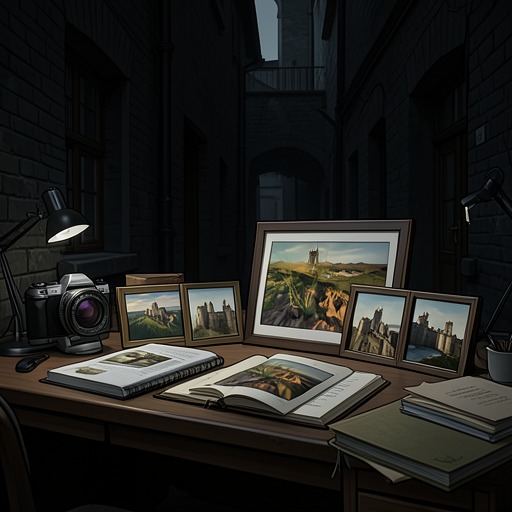
A separate clue concerns photographs Ronnie concealed in the Edinburgh University Library. Tracy says he called them his life insurance policy and told her they were on the fifth floor, inside a bound volume of the Edinburgh Review. The description establishes that Ronnie regarded the photographs as leverage or protection, though it does not by itself explain precisely what they depicted or what he intended to do with them. Their concealment connects his private precautions to the wider inquiry into the people and dealings around him.
Hyde’s Club and the Changing Interpretation
A diary belonging to James Carew gives John Rebus a recurring name: Hyde, recorded four times over six months, always late in the evening and on a Friday. The pattern connects James Carew to Ronnie’s warning to Tracy, which John Rebus had initially understood as a plea to hide. The written name Hyde gives that warning another possible meaning and draws the investigation toward Hyde’s Club. The clue matters because it redirects attention from a seemingly supernatural message to a place and a network of human relationships.
At Hyde’s Club, John Rebus finds a hidden boxing venue used for violent contests involving vulnerable men who are paid with money and drugs. The club caters to wealthy patrons seeking increasingly extreme entertainment. Ronnie’s presence there is established, but his role remains unresolved: John Rebus considers whether he was secretly photographing influential customers or was himself brought in as a fighter. The question of what the photographs show, and whether Ronnie was working independently or under pressure, remains distinct from the fact that he was connected to the club.
The larger conclusion is that the owner of the club had Ronnie killed by withholding his supply and then giving him poisoned heroin. Someone was sent to make the death look like a simple overdose; the body was moved and left in candlelight. Crucially, John Rebus concludes that the people who arranged this did not notice the pentagram and did not position the body to create an occult tableau. The symbols that had seemed to announce ritual evil were incidental to the murder’s staging, not a reliable explanation of its cause.
Aftermath and Narrative Significance
The public aftermath does little to make Ronnie’s death legible. Reports of the deaths of Finlay Andrews and Malcolm Lanyon mention that Finlay ran a club whose dealings were not entirely legitimate, but provide no details of its activities. The deaths are treated as separate matters, and the links surrounding the club remain obscure. Against that silence, Ronnie’s story exposes how an apparent overdose can conceal deliberate killing and how a victim’s addiction can make a staged explanation seem plausible.
Ronnie’s significance lies in the gap between what the scene appears to say and what the investigation can establish. Candles, a cross-like posture, and a pentagram invite a story of occult purpose; the contaminated heroin and the hidden club point instead to exploitation and concealment. His photographs promise a form of insurance, but their concealment also shows how fragile that protection was. Through Ronnie, the novel connects personal dependence to a dangerous supply, neglected urban surroundings, and an influential world able to keep its activities largely out of public view.